← Back to the founder directory
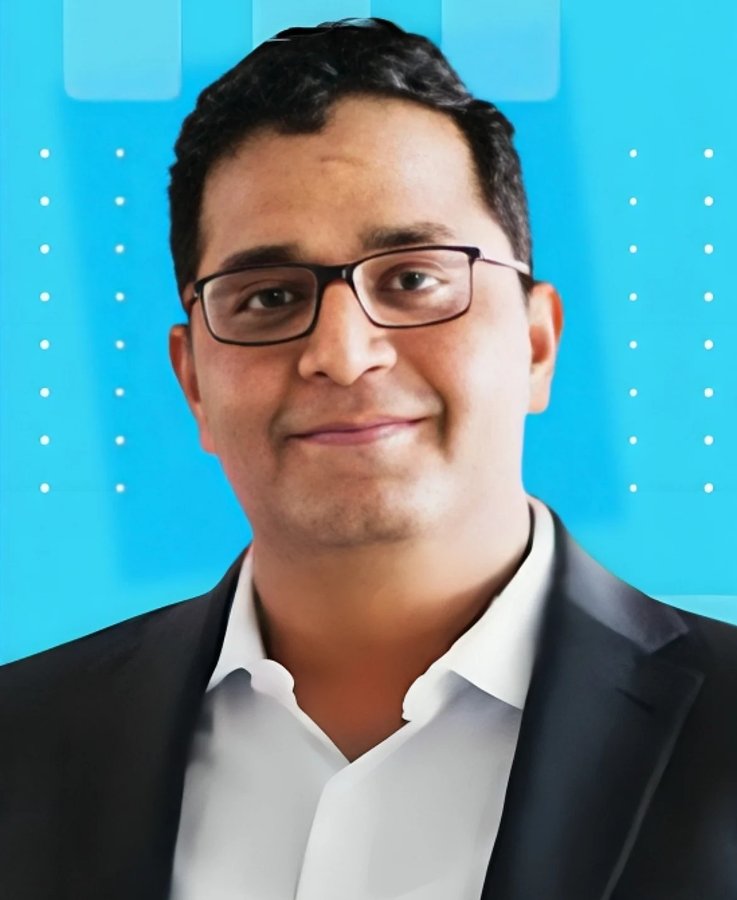
Vijay Shekhar Sharma
From a Hindi-medium school near Aligarh to the founder of Paytm, the app that put payments on the phone for millions of Indians.
- Born
- 7 June 1978, Aligarh, Uttar Pradesh, India
- Known for
- Founding One97 Communications and Paytm
- Industry
- Fintech, digital payments
- Education
- B.Tech, Delhi College of Engineering (now DTU)
Early life
Vijay Shekhar Sharma was born in Aligarh in 1978, the third of four children. His father, Sulom Prakash Sharma, was a schoolteacher and his mother, Asha Sharma, a homemaker. He went to a Hindi-medium school in Harduaganj, a small town near Aligarh, and started college at just 15. He graduated with a B.Tech from the Delhi College of Engineering, now Delhi Technological University, at 19.
Moving from a Hindi-medium school into an English-speaking engineering college was hard, and accounts of his life describe him working steadily on his English and his confidence rather than giving up.
First ventures
While still in college, in 1997, he started a website called indiasite.net. He sold it two years later for about US$1 million, a large sum for a student at the time. In 2000 he founded One97 Communications, which supplied mobile content such as news, cricket scores, ringtones, jokes and exam results to telecom customers. It was a modest business, but it taught him how mobile phones, telecom operators and everyday users actually behave.
The launch of Paytm
In 2010 One97 launched Paytm, a name often explained as “pay through mobile”. It began with prepaid mobile recharges and utility bill payments, which saved people a trip to a shop. Over the years it added a mobile wallet, QR-code payments for shopkeepers, merchant payment tools, ticketing, e-commerce and financial products such as insurance, investments and lending.
Demonetisation and rapid growth
The big turning point came in November 2016, when India withdrew 86% of its paper currency overnight. Millions of people suddenly needed another way to pay, and Paytm was ready. Forbes reported that its daily transactions tripled to about 8 million, and Vijay was named India's youngest billionaire. In August 2018, Berkshire Hathaway invested US$300 million in the company, a major endorsement for Indian fintech.
The IPO and the setbacks
In November 2021 Paytm went public, raising US$2.5 billion at a valuation of about US$19 billion, then India's largest IPO. The shares fell steeply afterwards. In early 2024 the Reserve Bank of India took action against Paytm Payments Bank, restricting its ability to take fresh deposits, and on 26 February 2024 Vijay stepped down as its part-time non-executive chairman and a board member. Critics pointed to governance and compliance gaps and to over-expansion into areas such as e-commerce and banking. The action was aimed at the bank, not at Vijay personally.
The turnaround
Paytm responded by refocusing on its core payments and merchant business and cutting costs. In 2024 it sold its movie ticketing and events business to Zomato. By the 2025–26 financial year the company reported its first full-year profit, reported at about ₹552 crore, which Vijay called “sustainably profitable”. For the June 2026 quarter it reported a profit of ₹220 crore on revenue of about ₹2,448 crore. He remains founder, chairman, managing director and CEO, and was reappointed as MD and CEO until December 2027.
Beyond Paytm
Vijay is an angel investor who has backed around 80 startups, including Hiver, GOQii, Zapr, NoBroker, Treebo and HackerEarth. He sits on the board of management of Netaji Subhas University of Technology in Delhi, was named UN Environment's Patron for Clean Air in 2017, and in 2022 became India's Universal Acceptance Ambassador for the ICANN-supported Universal Acceptance Steering Group. He is married to Mridula Parashar Sharma and they have one child.
Timeline
- 1978Born in Aligarh, Uttar Pradesh.
- 1997Starts the website indiasite.net while in college.
- 1999Sells indiasite.net for about US$1 million.
- 2000Founds One97 Communications, offering mobile content.
- 2010Launches Paytm.
- 2016Demonetisation drives a surge in digital payments; Paytm's daily transactions reportedly triple.
- 2018Berkshire Hathaway invests US$300 million.
- 2021Paytm lists, raising US$2.5 billion in India's largest IPO at the time.
- 2024Steps down from the Paytm Payments Bank board after RBI action; sells the movie ticketing business to Zomato.
- 2026Reports its first full-year profit (FY26) and a record profit for the June quarter.
Recognition
- Time magazine's 100 most influential people (2017)
- Entrepreneur of the Year, AIMA (2018)
- ET Entrepreneur of the Year (2016)
- Yash Bharati, Uttar Pradesh's highest state civilian award (2016)
- NDTV Indian of the Year and GQ Businessman of the Year (2016)
- Honorary doctorate from Amity University, Gurgaon (2016)
Leadership lessons
- Pay attention to the thing that frustrates you. A language barrier became something he worked to overcome.
- Build on what you already have. A mobile-content company gave One97 the telecom know-how to become Paytm.
- Be ready when the moment comes. Paytm was in place when demonetisation changed how India paid.
- Growth in too many directions has a cost, and focusing on the core business helped Paytm return to profit.
- Talk to your users directly, especially in a crisis. He often addresses customers and investors himself.
Sources
Written from public information, including Wikipedia, Pitch Karo India, Press Alchemy and The CEO Magazine India, plus recent results coverage from NewsBytes and Free Press Journal. The sources disagree on some details. For example, Pitch Karo India says he finished Class 12 at 14, while Wikipedia and the others say he started college at 15, so Wikipedia is followed where they differ. Financial figures are as reported by the press and may have changed. Net worth is left out because estimates conflict.